
Dog Skin Turning Black: Causes, Diagnosis & Treatment (2026)
Last reviewed: April 2026
Quick Facts: Dog Skin Hyperpigmentation
- Medical term: Hyperpigmentation — increased melanin (pigment) in the skin
- Always a symptom, not a disease — something else is causing it
- Most common causes: Allergies, yeast infection, Cushing's disease, hypothyroidism
- Often accompanied by: Skin thickening, hair loss, odor, itching
- Key tests: Skin cytology + blood panel (T4, ALP, cortisol)
- Prognosis: Good when the underlying cause is identified and treated
Have your dog's bloodwork results?
Upload them to VetLens — we'll flag the values that point to Cushing's disease, hypothyroidism, or allergic disease driving your dog's skin changes.
Upload My Dog's ResultsDarkening skin on a dog — whether it's the belly, armpits, groin, or along the back — is one of those signs that's easy to miss until it's pronounced. The medical term is hyperpigmentation: an increase in melanin production that turns the skin brown, grey, or black. On its own, hyperpigmentation is not a disease — it's a symptom. Something is causing the skin to react, and finding that underlying cause is the key to stopping it.
What Is Hyperpigmentation in Dogs?
Melanin is the pigment that gives skin and hair their color. When skin cells (melanocytes) are repeatedly stimulated — by inflammation, friction, hormones, or infection — they produce more melanin than usual, causing visible darkening.
Hyperpigmentation almost always comes with other changes. Chronic cases typically show lichenification — a thickening and hardening of the skin that gives it an elephant-hide texture. Hair loss in the affected area is common. The combination of dark, thickened, hairless skin patches tells the vet a lot about how long the process has been going on and how active the underlying cause is.
Common Causes of Black Skin in Dogs
Allergies — the most common driver
Chronic skin inflammation from environmental allergies (atopic dermatitis) or food allergies is the leading cause of progressive hyperpigmentation in dogs. Years of scratching, chewing, and rubbing damage the skin and trigger melanin overproduction. The inner thighs, armpits, belly, and paws are typical locations. Secondary yeast and bacterial infections accelerate the darkening and thickening.
Yeast infection (Malassezia)
Malassezia yeast overgrowth triggers a strong inflammatory response in the skin that directly stimulates melanin production. Chronic yeast dermatitis is one of the fastest routes to dark, thickened, elephant-like skin — especially in skin folds, armpits, and groin. The skin also becomes greasy and develops a distinctive musty odor.
Cushing's disease (hyperadrenocorticism)
Excess cortisol from a pituitary or adrenal tumor causes multiple skin changes including hyperpigmentation, symmetrical hair loss (flanks and trunk), thin fragile skin, comedones (blackheads), and sometimes calcinosis cutis. The pot-bellied appearance and increased thirst are accompanying clues. ALP is typically markedly elevated on bloodwork — often above 500 U/L.
Hypothyroidism
Low thyroid hormone slows skin cell turnover and alters skin structure, leading to a "tragic face" expression (myxedema), symmetrical hair loss, and hyperpigmentation — particularly on the trunk. The skin may also feel cool and thickened. Lethargy, weight gain, and cold intolerance are classic accompanying signs. A low T4 on bloodwork confirms the diagnosis.
Acanthosis nigricans
A condition producing velvety, dark, thickened skin — most prominently in the armpits. The primary form is almost unique to Dachshunds, appears before age 1, and is incurable though manageable. The secondary form occurs in any breed as a response to allergies, obesity, hormonal disease, or friction and can resolve when the trigger is treated.
Post-inflammatory hyperpigmentation
Skin that has healed from a wound, rash, hot spot, or infection often darkens temporarily. This is benign — the pigmentation usually fades over weeks to months once the inflammation resolves. No specific treatment is needed, though sunscreen (pet-safe) can prevent UV from making it permanent.
Mange (demodicosis)
Generalized demodex mange causes significant skin inflammation, secondary infections, and subsequent hyperpigmentation — particularly in young dogs or immunocompromised adults. The skin often becomes dark, scaly, and thickened. Skin scraping confirms the diagnosis.
Sex hormone imbalances
Intact male dogs with testicular tumors (especially Sertoli cell tumors) and females with ovarian cysts or pyometra can develop symmetrical hair loss and hyperpigmentation due to hormone dysregulation. Neutering or treating the primary condition typically resolves the skin changes.
What the Location Tells You
Where the darkening appears on your dog's body is one of the most useful clues for narrowing the cause:
| Location | Most Likely Cause | Other Features |
|---|---|---|
| Armpits (axillae) | Acanthosis nigricans, allergies, yeast | Velvety texture, odor |
| Belly / groin | Allergies, yeast, Cushing's | Often itchy; may have comedones |
| Flanks / trunk (symmetrical) | Cushing's, hypothyroidism, sex hormone | Hair loss; not typically itchy |
| Paws / between toes | Allergies with secondary yeast | Reddish-brown staining, licking |
| Skin folds | Yeast fold dermatitis, friction | Odor, moisture, redness |
| Neck / back of ears | Hypothyroidism, allergies | Often with hair thinning |
| Localized spot (healed area) | Post-inflammatory hyperpigmentation | No active inflammation; usually fades |
How Vets Diagnose the Cause
Because hyperpigmentation is a symptom rather than a disease, the diagnostic goal is identifying the underlying driver. Vets typically work through a systematic approach:
Distribution of skin changes, itch level, onset speed, breed, age, weight changes, thirst/urination, and prior skin problems all guide the differential diagnosis before any tests are run.
Tape prep or swab to look for Malassezia yeast and bacteria. Quick in-clinic test — if yeast and bacteria are present, treating the infection is usually the first step regardless of the underlying cause.
Rules out Demodex mange, which causes similar skin changes in young dogs and immunocompromised adults.
CBC + chemistry including T4 (thyroid), ALP, cholesterol, glucose, and cortisol testing if Cushing's is suspected. Essential for ruling out hormonal causes, which will not resolve with topical treatment alone.
Punched or excised skin sample sent to a veterinary dermatopathologist. Used when the cause is unclear, when acanthosis nigricans needs to be confirmed, or when an unusual or severe skin condition is suspected.
Intradermal or serum allergy testing identifies specific environmental allergens when atopic dermatitis is the suspected driver. Food allergy diagnosis requires an 8–12 week elimination diet trial — blood tests for food allergy are unreliable.
Not sure what's causing your dog's skin to darken?
Allergies, yeast overgrowth, and hormonal imbalances all look similar on the surface. A licensed vet can review your dog's pattern and history, and prescribe Apoquel, Cytopoint, or antifungals if allergies or yeast are the likely driver.
Talk to a Vet Online — Today →30% off with code PETS30
We may earn a commission if you purchase through this link, at no extra cost to you.
Key Bloodwork Markers to Know
If your vet runs a blood panel alongside the skin exam, here are the values most relevant to hyperpigmentation and what they indicate:
| Marker | Normal Range (dogs) | What It Indicates |
|---|---|---|
| T4 (total thyroxine) | 1.0–4.0 µg/dL | Low T4 confirms hypothyroidism — a major cause of symmetrical hair loss + hyperpigmentation |
| ALP (alkaline phosphatase) | 23–212 U/L | Markedly elevated (>500 U/L) with Cushing's disease — most sensitive early marker |
| Cortisol (LDDS or ACTH) | Post-ACTH: <18 µg/dL | Elevated confirms Cushing's; run when ALP and clinical signs suggest it |
| Cholesterol | 112–328 mg/dL | Elevated with both hypothyroidism and Cushing's; a useful supporting clue |
| Eosinophils | 0.1–1.2 × 10³/µL | Elevated with allergic disease — supports environmental or food allergy as driver |
| Neutrophils / stress leukogram | 3.0–11.5 × 10³/µL | High neutrophils + low lymphocytes = stress leukogram, seen with Cushing's |
| Glucose | 70–138 mg/dL | Elevated glucose with Cushing's (insulin resistance) or concurrent diabetes |
Got your dog's recent lab results?
Upload them to VetLens — we'll explain what T4, ALP, cortisol, and every other value means in plain language, and flag what needs follow-up.
Analyze My Dog's BloodworkTreatment by Underlying Cause
Hyperpigmentation itself is not treated directly — treating the underlying condition is what allows the skin to recover. Here is how each major cause is managed:
| Cause | Primary Treatment | Will Skin Color Reverse? |
|---|---|---|
| Allergies | Apoquel, Cytopoint, immunotherapy, food trial | Partial — may lighten over months; rarely 100% |
| Yeast infection | Antifungal shampoo, itraconazole/fluconazole orally | Yes, with time — if underlying cause also addressed |
| Cushing's disease | Trilostane or mitotane; surgery for adrenal tumors | Often improves significantly over 3–6 months |
| Hypothyroidism | Daily levothyroxine (thyroid supplement) | Yes — skin and coat often improve markedly within 3 months |
| Acanthosis nigricans (primary) | Medicated shampoos, vitamin E, melatonin; no cure | No — manageable but permanent |
| Acanthosis nigricans (secondary) | Treat the trigger (allergies, obesity, hormones) | Often yes, with treatment of root cause |
| Demodex mange | Isoxazoline parasiticides (Bravecto, Simparica Trio) | Yes — skin typically normalizes over 3–6 months |
| Post-inflammatory | No specific treatment; resolve original inflammation | Usually fades on its own over weeks to months |
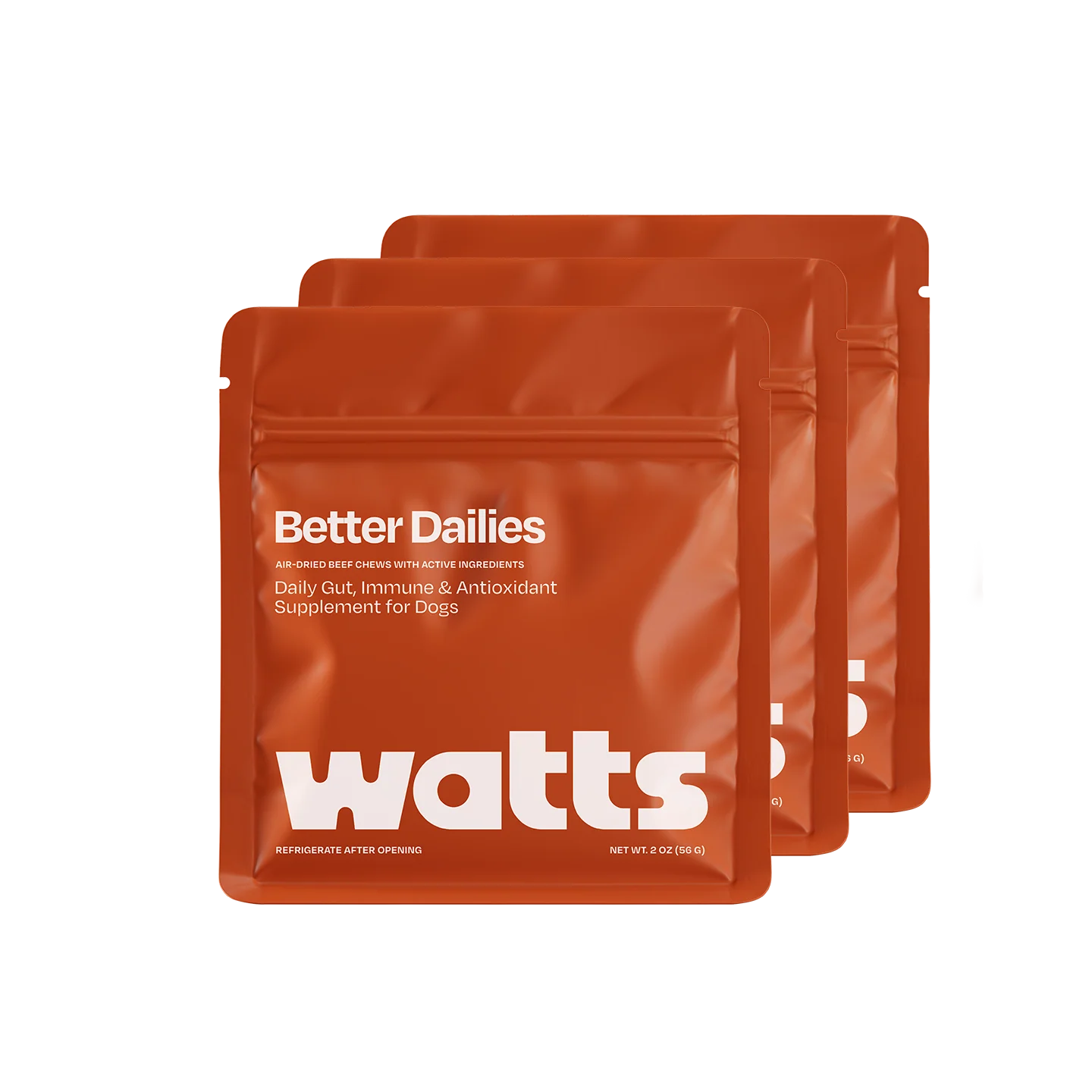

One Beef Stick a Day, Full-Body Support
Gut, immune & cellular support in a single daily treat your dog will actually enjoy.
Shop Better Dailies →Made by the team behind VetLens.
Hyperpigmentation takes time to fade
When to See Your Vet
Understand What Your Dog's Tests Are Telling You
Upload bloodwork, skin biopsy reports, or vet notes to VetLens. Our AI explains every value in plain language — so you can ask better questions and understand exactly what's going on with your dog's skin.
Try VetLens FreeReference: Acanthosis Nigricans and Postinflammatory Hyperpigmentation, Merck Veterinary Manual.
Related Reading
Yeast Infection in Dogs: Symptoms, Causes & Treatment
Musty odor, greasy skin, paw licking — recognizing and treating Malassezia in dogs.
Cushing's Disease in Dogs: Symptoms, Bloodwork & Treatment
Pot belly, hair loss, fragile skin — understanding high cortisol and Cushing's in dogs.
Dog Itching & Scratching: Causes, Treatments & When to See a Vet
Allergies, fleas, mange — why your dog keeps scratching and what actually works.
High ALP in Dogs: What It Means & When to Worry
Elevated ALP is one of the first clues to Cushing's disease and liver problems in dogs.
Dog CBC Blood Test: What Every Value Means
RBC, WBC, platelets — plain-language guide to your dog's complete blood count.
Frequently Asked Questions
Why is my dog's skin turning black?
Darkening skin (hyperpigmentation) is almost always a symptom of an underlying problem — most commonly chronic allergies, yeast skin infection, Cushing's disease, or hypothyroidism. It is rarely normal unless it's localized to a healed wound (post-inflammatory) or a naturally pigmented area.
Is it normal for a dog's skin to turn black?
Some darkening after a healed rash or wound is normal and fades with time. Progressive darkening of previously normal skin — especially with thickening, hair loss, or itching — is not normal and warrants a vet visit.
What is acanthosis nigricans in dogs?
Dark, velvety, thickened skin — most commonly in the armpits. The primary form is almost exclusive to Dachshunds (no cure, onset before age 1). Secondary acanthosis nigricans occurs in any breed due to allergies, obesity, or hormonal disease and often resolves when the trigger is treated.
Can allergies cause a dog's skin to turn black?
Yes — allergies are the most common cause. Chronic skin inflammation from scratching and chewing triggers melanin overproduction over time, particularly in the inner thighs, armpits, belly, and paws. Secondary yeast infections accelerate the process.
What does Cushing's disease skin look like?
Thin, fragile skin that bruises easily; symmetrical hair loss on the flanks and trunk; hyperpigmentation; comedones (blackheads); and sometimes calcinosis cutis (hard calcium deposits). A pot belly and increased thirst are accompanying signs. ALP is typically markedly elevated on bloodwork.
What tests does a vet run for darkening dog skin?
Skin cytology (yeast/bacteria), skin scraping (mange), blood panel including T4 (thyroid), ALP and cortisol testing (Cushing's), cholesterol, and CBC. A skin biopsy is added if the cause remains unclear after initial testing.